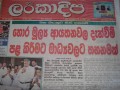
Exploring Sri Lanka’s Media Landscape: A Unique Cultural Mirror
Sri Lanka’s media is as vibrant and diverse as the country’s cultural heritage. From traditional newspapers and radio stations to modern digital outlets and television channels, Sri Lanka’s media reflects the complexities, stories, and cultural identity of this island nation. For travelers and those curious about Sri Lanka’s societal fabric, the media offers a unique way to understand the local perspectives, current issues, and traditional values that shape the country’s narrative.
The Sri Lankan media landscape is composed of state-owned and private media, offering content in Sinhala, Tamil, and English to cater to the multilingual population. With roots that trace back to colonial times, the media in Sri Lanka has grown and evolved, adapting to political changes, technological advances, and shifting public interests.
The media in Sri Lanka has a long history dating back to the British colonial period, when the first newspaper, the Colombo Journal, was published in the early 19th century. Initially, media outlets served colonial interests, but over time, they began to reflect the perspectives of Sri Lankan society, playing a key role in the independence movement and the country’s post-independence identity.
After gaining independence in 1948, Sri Lanka’s media industry saw considerable growth, diversifying into radio, television, and later digital platforms. Today, the media operates under various regulations that aim to maintain a balance between freedom of expression and social responsibility. Despite challenges, media remains a vital part of Sri Lanka’s democratic landscape, contributing to public discourse and cultural preservation.
Sri Lanka’s media spans various formats, including print, radio, television, and digital, each contributing to the national dialogue in distinct ways.
Print media has a long-standing presence in Sri Lanka and continues to play a critical role in informing the public. Major newspapers like The Daily News, Sunday Observer, and Dinamina (Sinhala) cover a range of topics from politics to social issues. While Sinhala newspapers dominate readership, Tamil and English publications serve linguistic minorities and expatriates, ensuring that all communities have access to news and information.
Radio is one of the oldest and most beloved forms of media in Sri Lanka. Stations such as SLBC (Sri Lanka Broadcasting Corporation) reach audiences nationwide, with programs that include music, talk shows, news, and cultural discussions. Radio remains particularly popular in rural areas, where it provides a reliable source of information, especially in times of natural disasters or political unrest.
Local FM channels cater to a wide variety of interests, offering music, lifestyle content, and entertainment in Sinhala, Tamil, and English. Radio Ceylon, Asia’s oldest radio station, has a legacy that resonates even today, blending traditional values with modern tastes in a way that reflects the country’s cultural evolution.
Television is another key medium in Sri Lanka, with both state-run and private channels offering diverse programming. Channels such as Rupavahini, ITN, and Sirasa TV provide local content, including news, drama, and reality shows, which are immensely popular. News coverage on these channels is a blend of national and international stories, and it also highlights local cultural and religious events, which are often broadcast live.
For travelers, watching local television provides an entertaining introduction to Sri Lankan customs and viewpoints, especially through programs featuring traditional music, dance, and cooking.
The rise of the internet and mobile technology has transformed the way Sri Lankans consume news. Online news portals such as Ada Derana, News First, and Daily Mirror offer real-time updates and cover a wide array of topics. Social media platforms, particularly Facebook, Twitter, and Instagram, have also become essential for information sharing, especially among younger audiences.
The shift towards digital media allows people to access news instantly and participate in online discussions, making it a powerful tool for public engagement and grassroots activism. For tourists, digital platforms can be a useful source of updates on local events, travel advisories, and cultural festivals.
For those interested in delving deeper into the country’s media culture, there are unique destinations and activities that offer a ground-level experience of Sri Lankan media history and influence.
A visit to the SLBC headquarters offers a fascinating insight into the history of radio in Sri Lanka. As Asia’s oldest radio station, SLBC has played a critical role in broadcasting both informative and cultural content to the public since its establishment in 1925. Tours of the facility may allow visitors to see vintage broadcasting equipment and learn about how radio has evolved over the years in Sri Lanka.
Home to a collection of historic newspapers and publications, the Colombo Museum Library provides a deep dive into Sri Lanka’s print media history. This library holds a valuable archive of old newspapers, magazines, and documents that reveal the country’s past political events, social changes, and media transformations.
Visitors can see early editions of significant newspapers that marked pivotal moments in the nation’s history, offering a tangible connection to the evolution of Sri Lankan media.
Sri Lankan cinema, while relatively young, has a dedicated following and a unique style that reflects the island’s culture. Watching a Sinhala, Tamil, or English film in a local theater provides an immersive experience of Sri Lanka’s film industry. In Colombo, theaters such as Savoy and Liberty Cinema screen both local and international films, offering a glimpse into the country's cinematic tastes.
A few media houses in Colombo offer guided tours where visitors can observe how news is produced and broadcasted. For example, studios affiliated with Rupavahini or Sirasa TV may occasionally allow visitors to watch live news broadcasts, reality show recordings, or engage with media professionals.
For travelers interested in blending cultural exploration with insights into Sri Lanka’s media, here are some suggested itineraries:
Combine Kandy’s cultural landmarks with Colombo’s media highlights in a two-day itinerary.
Combine relaxation and local culture by pairing Sri Lanka’s beautiful beaches with an exploration of media.
Sri Lanka’s media offers a window into its multifaceted culture and societal issues. Whether it’s through the serious news coverage on national television, the comedic sketches on local radio, or the expressive narratives in Sri Lankan films, each medium adds layers to the understanding of Sri Lankan society.
Media also plays a crucial role in preserving Sri Lanka’s heritage, as traditional performances, religious events, and cultural festivals are frequently broadcasted on television and radio. Observing these elements provides insights into the everyday life, values, and celebrations that shape Sri Lankan identity.
For tourists and culture enthusiasts, engaging with Sri Lankan media is more than just a means to stay informed; it is a cultural experience in its own right. Visiting media hubs, browsing historic archives, or simply watching a Sinhala film opens up new perspectives and enhances the travel experience by connecting visitors with the soul of the island.
With its unique blend of history, modernity, and cultural expression, Sri Lanka’s media is an essential part of its national identity. Exploring it offers travelers a grounded understanding of the nation’s journey, its challenges, and the stories that make up the heartbeat of this beautiful country.

Ancient Cities
National Parks
Popular Beaches
2024 sri-lanka.asia , All rights reserved [ Sri Lanka Asia Travel & Tourism Foundation ] | Terms and Conditions | Privacy Policy | Disclaimer | Instagram | Linkedin